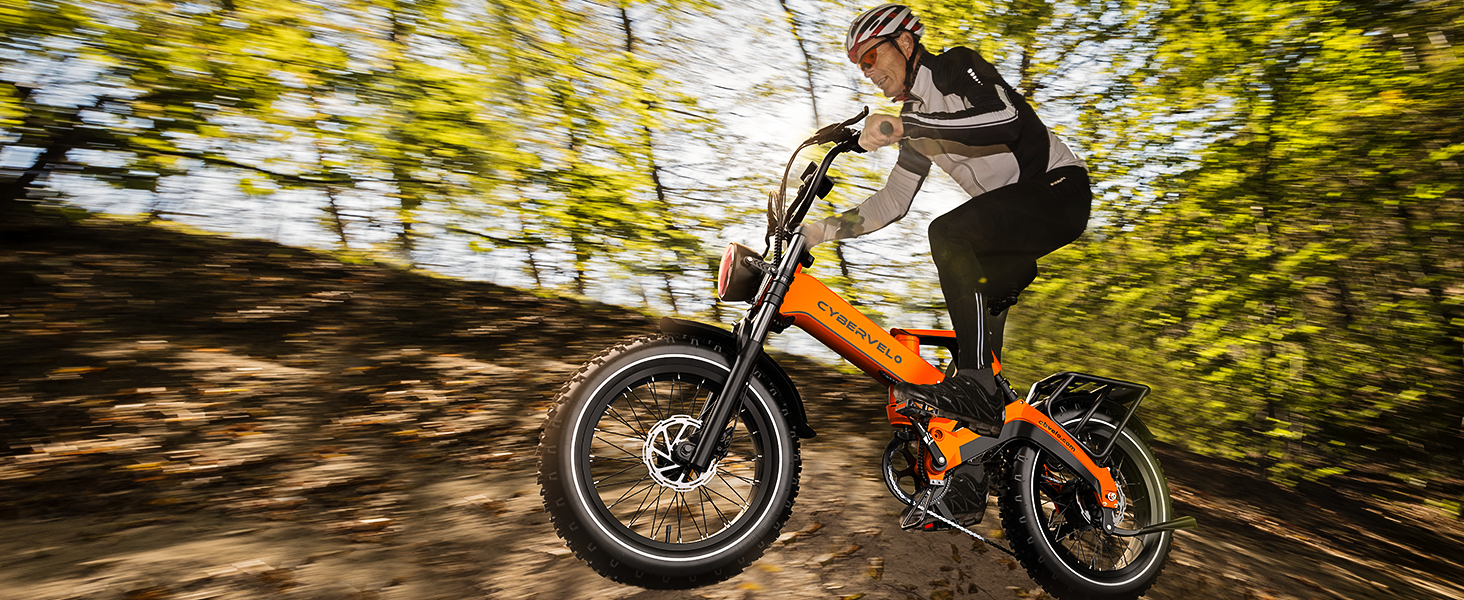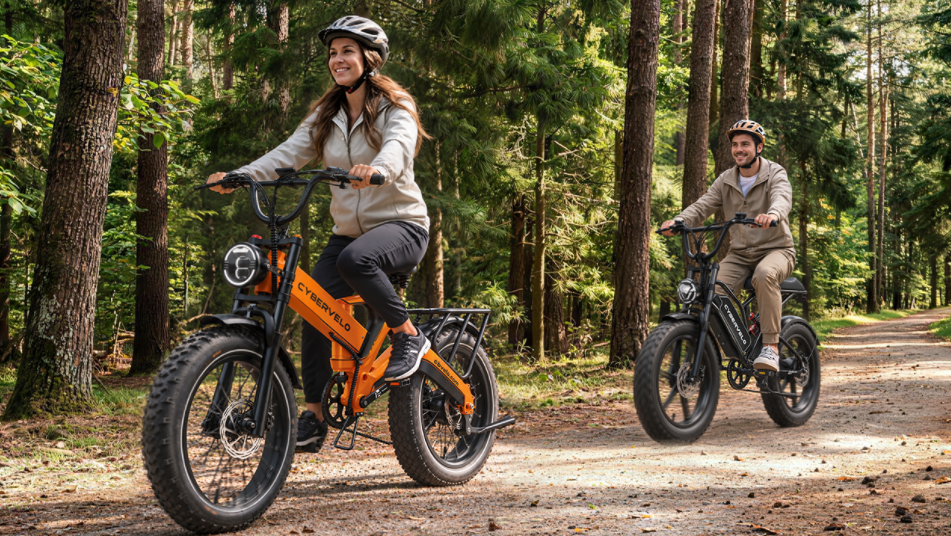
Choosing the right electric bike isn’t just about selecting a powerful motor or a high-capacity battery—it heavily depends on the rubber touching the ground. When shopping for a heavy-duty electric fat tire bike, you will inevitably run into a major dilemma: 20×4.0 vs 26×4.0 fat tires.
Both options deliver incredible traction and shock absorption over sand, snow, and rough pavement. However, their physical dimensions drastically alter agility, roll-over capability, seat height, and storage convenience. Selecting the wrong tire size can turn a daily commute into a hassle or make off-road trails feel underpowered.
If you are split between a compact everyday cruiser and an all-terrain electric beast, this guide breaks down the real-world differences, mechanical performance, and practical buying suggestions to help you pick the perfect setup.
Understanding the Essentials: 20×4.0 vs 26×4.0 Fat Tires
While both setups qualify as “fat tires,” their geometry changes how an electric bike handles every mile.
- 20×4.0 Fat Tires: Feature a smaller wheel diameter that lowers the bike’s overall center of gravity. This translates to snappy acceleration, nimble tight-space handling, and easier mounting or dismounting. Crucially, 20-inch wheels allow for compact frame designs—making them ideal for urban commuters, riders with limited storage space, or those looking for a two-person city cruiser.
- 26×4.0 Fat Tires: Represent the traditional full-size mountain and off-road fat tire standard. The larger outer diameter acts like an obstacle-clearing steamroller, easily rolling over deep potholes, rocks, exposed roots, and thick mud. They deliver exceptional high-speed stability and comfortable long-distance cruising over rough terrain.
Deep Dive: Comparing Real Performance Across Key Scenarios
To help you visualize how these dimensions perform on real streets and trails, let’s look at how specific builds leverage each tire size.
1. Urban Agility, Storage, and Daily Utility (20×4.0 Tires)
For urban environments, quick stops, compact apartments, and dual-rider utility, 20×4.0 tires offer unmatched versatility. The smaller wheel rim allows for higher low-end torque output, meaning your bike jumps off the line quickly at traffic lights.
Ultimate Folding Portability & Long-Range Power
If you want massive long-distance range without sacrificing space, compact 20-inch setups excel. Consider the Cybervelo EK6 MAX Folding Electric Bike. Built with a lightweight yet ultra-durable magnesium alloy frame, it pairs puncture-resistant 20×4.0 tires with a massive 48V 40AH battery. Powered by a 1500W high-speed motor reaching up to 40 MPH and offering a maximum range of 120 miles, the EK6 MAX proves that smaller 20-inch wheels can easily handle extreme performance while keeping a foldable profile. Its premium dual suspension and hydraulic disc brakes keep every mile smooth.
Heavy-Duty Urban Commuter & Passenger Cruiser
If your daily routine involves carrying gear or taking a passenger along, a reinforced 20×4 frame is hard to beat. The Cybervelo EK11 Electric Bike features a high-carbon steel frame with robust one-piece magnesium alloy wheels wrapping its 20×4 fat tires. Its 1000W motor reaches top speeds of 28 MPH with up to 80 miles of range. Designed specifically for practical utility, it comes equipped with an extended two-person seat, dual front/rear absorbers, and high-safety dual disc brakes, making it a reliable workhorse for city travel.
2. High-Speed Thrills & Extreme Off-Road Dominance (26×4.0 Tires)
When your rides head onto loose gravel, deep forest trails, sand dunes, or fast-paced open roads, full-size 26×4.0 tires take over. The larger circumference acts as a natural shock absorber and provides a wider contact patch for ultimate traction.
Unmatched Power for All-Terrain Performance
For riders who demand pure speed, extreme hill-climbing power, and trail dominance, combining a 26×4.0 footprint with high wattage is essential. Look at the high-performance Cybervelo EK9 Electric Bike. Driven by a massive 5000W motor pumping out 120 N·m of torque and powered by a 60V 50AH battery, it roars to a top speed of 50 MPH with up to 120 miles of range. Paired with TEKTRO/Logan hydraulic brakes and a lockout dual-crown aluminum front suspension fork, the 26×4.0 wheel setup glides over high-speed off-road obstacles with unwavering stability.
Accessible All-Terrain Riding
For trail enthusiasts who want off-road capability with easy mounting, step-through frames with 26×4.0 wheels offer the best of both worlds. The Cybervelo EK10 Step-Thru Ebike combines rugged high-carbon steel durability with 26×4.0 off-road fat tires. Driven by a punchy 1000W motor hitting 28 MPH and 80 miles of range, its mechanical dual disc brakes and ergonomic frame make off-road adventures accessible to riders of all sizes.
Feature & Specification Comparison
To simplify your decision, here is how these four distinct models stack up across frame materials, tire sizes, and power ratings:
| Model | Tire Size | Frame Material | Motor & Top Speed | Battery & Max Range | Key Highlight |
| EK6 MAX | 20×4.0 | Magnesium Alloy | 1500W / 40 MPH | 48V 40AH / 120 Miles | Foldable frame, dual suspension, hydraulic brakes |
| EK11 | 20×4.0 | High Carbon Steel | 1000W / 28 MPH | 48V 20AH/30AH / 80 Miles | Extended seat for 2 riders, magnesium alloy wheels |
| EK9 | 26×4.0 | Aluminum Alloy | 5000W / 50 MPH | 60V 50AH / 120 Miles | 120 N·m torque, 50 MPH speed monster, dual crown fork |
| EK10 | 26×4.0 | High Carbon Steel | 1000W / 28 MPH | 48V 25AH / 80 Miles | Step-thru convenience, dedicated off-road stability |
Buying Advice: How to Choose the Right Size for You
Before clicking “buy,” run through this quick checklist based on your lifestyle:
Choose 20×4.0 Fat Tires If:
- You live in an apartment, need to store your ebike indoors, or transport it in an SUV trunk.
- You frequently carry a second passenger or heavy groceries.
- You prefer a lower standover height that makes stopping and touching the ground effortless.
- You ride primarily on pavement, city streets, smooth bike paths, or light park gravel.
Choose 26×4.0 Fat Tires If:
- You are tall or prefer a traditional full-sized bicycle riding posture.
- Your route includes rocky trails, deep sand, snow, or unpredictable off-road terrain.
- You plan to ride at high speeds where large wheels offer superior momentum and tracking.
- Storage footprint is not a concern at home or work.
Frequently Asked Questions (FAQ)
Are 20×4 fat tire ebikes easier to ride for shorter adults?
Yes. The smaller wheel rim lowers the overall frame height, allowing shorter riders to comfortably place both feet flat on the ground when stopped, boosting riding confidence significantly.
Do 26×4 fat tires ride smoother than 20×4 tires?
On rough, uneven off-road terrain, yes. The larger diameter bridging over gaps, rocks, and bumps reduces the shock transmitted to the handlebars. However, a 20×4 ebike with full dual suspension (like the Cybervelo EK6 MAX) can offer an equally smooth ride on city streets.
Which tire size gets better battery efficiency?
Generally, 20-inch wheels require less rotational energy to accelerate from a complete stop, saving battery power in heavy stop-and-go city traffic. Once up to cruising speed, however, 26-inch tires maintain momentum better over long stretches.
Final Thoughts & Next Steps
Choosing between 20×4.0 and 26×4.0 fat tires comes down to balancing agility and compact storage against high-speed, rough-terrain stability. If quick acceleration, urban practicality, or folding storage top your list, a 20-inch model like the versatile EK6 MAX or passenger-ready EK11 is your best bet. If you want high-speed performance, massive torque, and effortless obstacle clearance, step up to a 26-inch off-road beast like the EK9 or EK10.
Ready to find your perfect ride? Explore the full range of fat-tire models and detailed specs at Cybervelo Electric Bikes today!